 Chickie Wah Wah
Ask a visitor where to hear live music in New Orleans and they’ll say Bourbon Street. Ask a local the same question and they’ll say almost anywhere else. This isn’t snobbery, and it isn’t a secret handshake. It’s a simple, practical difference between music as decoration and music as the reason you left the house.
Locals mostly skip Bourbon Street for live music — not out of snobbery, but because rooms built for listening, like Chickie Wah Wah in Mid-City, let the music win instead of competing with bar noise and crowds.
What Bourbon Street Actually Is
Bourbon Street is an experience, and on its own terms it delivers exactly what it promises: cover bands, daiquiris to go, and noise pouring out of every open door. If you want a loud, chaotic, unmistakably-New-Orleans night with a drink in your hand, it works. Nobody needs to apologize for enjoying it.
But be honest about what it is. Almost none of it is built around listening. The music competes with the bar, the TV over the bar, the street outside, and the conversation at the next table — and in that fight, the music almost always loses. The bands are often working hard and playing well; the room just isn’t designed to let you notice. That’s fine for a bachelor party. It’s not where the city’s serious players do their serious work, and it’s not where the people who live here go when they actually want to hear music.
Where the Music Actually Lives
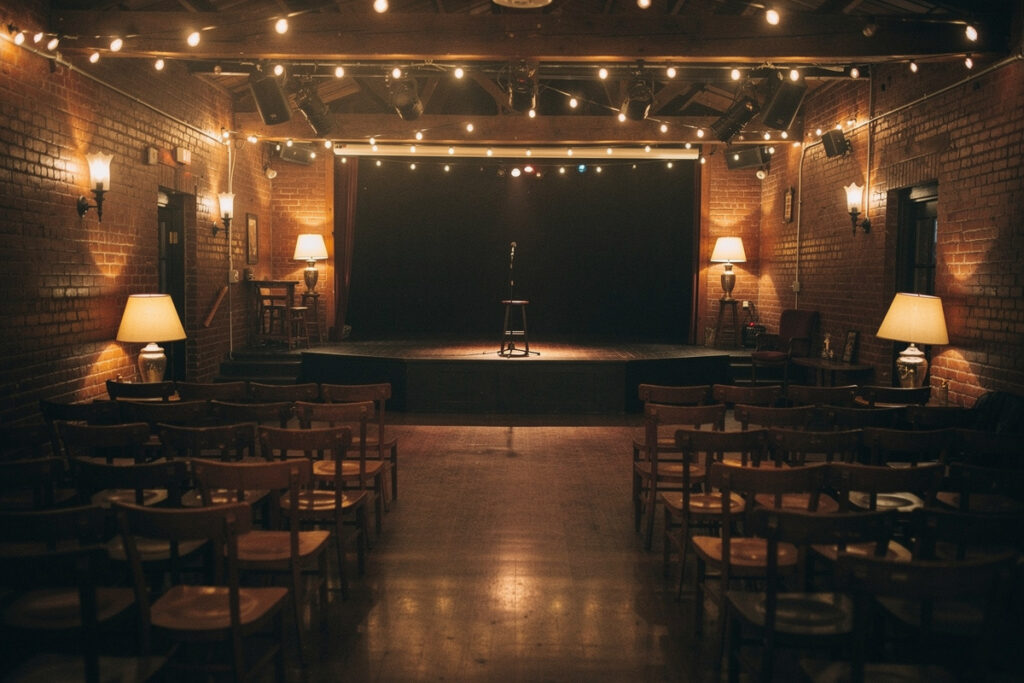
The real New Orleans scene is spread across the neighborhoods — Frenchmen Street, the Marigny, Mid-City, and a scattering of rooms most tourists never find. A lot of it happens in venues designed so the music wins instead of the noise. Chickie Wah Wah, in Mid-City on Canal Street, is one of those rooms.
The differences are concrete. It holds around 200 people, so no seat is far from the stage. The cover charge goes directly to the musicians — you’re paying the band, not a promoter. And the whole place is arranged around a single idea: that you came to hear somebody play, and everything else should get out of the way. That idea has a name — the “listening room” — and it’s the thing that separates a real music night from background sound. We break down exactly what makes a listening room different here.
The Location Is Half the Point
There’s a reason locals will happily travel to Mid-City for a show instead of walking to whatever’s nearest. Distance from the tourist core keeps the room honest. The crowd is there because they chose that specific show, not because they wandered in off the street between bars. That changes the entire feel of a night — you’re surrounded by people who want to hear the same thing you do.
And getting there is no obstacle. The Canal streetcar drops you directly across the street, a short ride from the French Quarter, which means you can trade the noise of downtown for a real listening room without renting a car or planning an expedition. We wrote a full streetcar guide if you want the step-by-step, but the short version is: it’s easier than parking near Bourbon Street.
The trade is simple: leave the noise of the Quarter, and you get to actually hear the band. Locals made that trade a long time ago.
What You Get Instead
When the room is built for listening, the whole night changes. The dynamics of a song come through — the difference between a whisper and a shout, which is where most of the emotion in music actually lives. A quiet passage stays quiet instead of drowning. The player takes a chance because the audience is with them. And you end up hearing things — a lyric, a solo, an offhand story between songs — that would be flatly impossible over the din of a Bourbon Street bar.
It’s telling that the people who program the city’s biggest stages think highly of its small ones. As Quint Davis, the longtime producer and director of the New Orleans Jazz & Heritage Festival, put it, Chickie Wah Wah is “simply one of the best music venues in New Orleans, which is saying a hell of a lot.” When the person who runs Jazz Fest says that about a 200-seat room, it’s worth listening to.
It’s Not About Snobbery — It’s About the Money, Too
There’s a practical, unglamorous reason the real scene runs on rooms like this, and it’s worth being honest about: where the money goes. At Chickie Wah Wah, the cover charge goes directly to the musicians on stage. You are, quite literally, paying the band. That changes the whole relationship between the audience and the show — the ticket isn’t a cover to get into a bar that happens to have music; it’s your direct support of the people playing.
On a lot of Bourbon Street, the economics run the other way: the music is a lure to sell drinks, and the band is a cost of doing business rather than the business itself. Neither model is evil, but they produce very different rooms. When the players are the point of the economics, they become the point of the room, and everything — the sound system, the seating, the quiet — gets organized around them. When they’re a loss-leader for the bar, they get organized around the bar.
Locals gravitate to the first kind of room partly because it feels better and partly because it is better — better for the musicians who make the city worth visiting in the first place. Choosing a listening room is, in a small way, choosing to keep New Orleans music economically possible for the people who make it.
This is the part visitors often don’t realize until someone points it out: the New Orleans music they came to experience only exists because working musicians can make a living playing it, and that living is built one honest room at a time. Every ticket to a listening room is a small vote for the kind of city that keeps producing the players everyone flies in to hear. Bourbon Street runs on volume and turnover; rooms like this run on people who care about the specific artist on the specific night. Both will always exist — but only one of them is where the music actually gets sustained.
How to Do It Like a Local
Skip the pre-planned Bourbon Street crawl for one night and do it the way people who live here do:
- Check the calendar and pick a show, not a street. Choose the music first and let it decide where you go.
- Buy the ticket in advance — it’s cheaper than the door, and it locks in your night.
- Take the streetcar up Canal. Let the ride be part of the evening.
- Get there near doors, grab a spot, and then do the one thing Bourbon Street never asks of you: actually listen.
Bourbon Street will still be there when you get back, exactly as loud as you left it. The difference is that you’ll have actually heard something — the thing you came to New Orleans for in the first place. If you want the backstory of the room while you’re at it, the history of Chickie Wah Wah is a good place to start, and it explains a lot about why a night here feels different from a night anywhere near Bourbon.