 Chickie Wah Wah
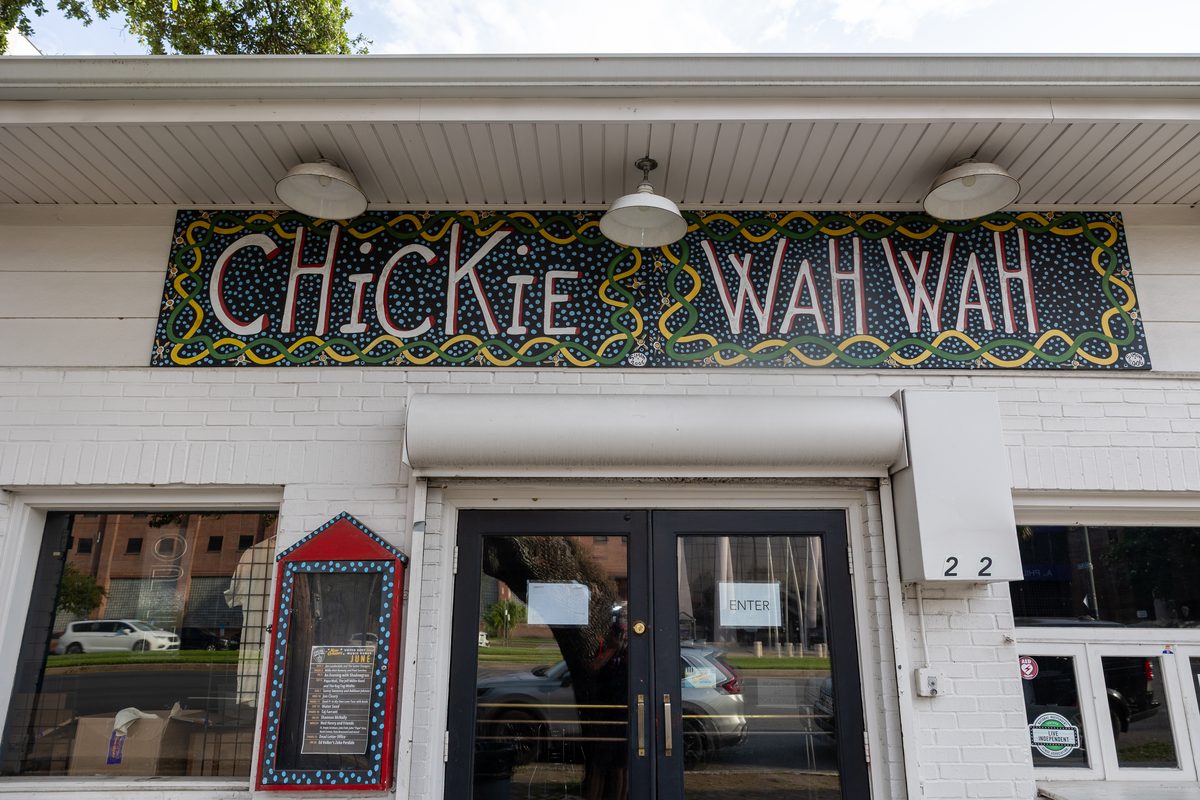
Chickie Wah Wah is a live-music listening room at 2828 Canal Street in New Orleans, opened in 2006 by Dale Triguero and named after a 1956 Bobby Marchan song. It has been community-owned since a 2022 purchase from Triguero’s estate following his death in 2021.
The Name
Two Singers, One Song
In 1956, Bobby Marchan — one of New Orleans’ most flamboyant and boundary-breaking performers — cut a single called “Chickie Wah Wah,” written by his bandleader Huey “Piano” Smith. Two years later, in 1958, Smith released his own version, “Little Chickee Wah Wah,” on Vin Records. Both records still hang on our walls, honored with painted portraits of the two men who made them.
Marchan went on to become a pivotal figure in the city’s music scene — a founding voice alongside Huey Smith and The Clowns, and a performer decades ahead of his time. When Dale Triguero named his new listening room after that song in 2006, he wasn’t being clever. He was planting a flag.
Read the full story of the name →
The Builder
Dale Triguero
Dale Triguero was a Brooklyn kid who drove cabs in Manhattan, performed in theaters across New York and Los Angeles, and somehow found his way to New Orleans — and never left. He appeared as a bartender in HBO’s Tremé, the definitive cultural document of post-Katrina New Orleans, because that’s exactly what he was: a fixture of the city’s culture, someone who belonged in the scene rather than just observing it.
He got his start in New Orleans music at the Old Point Bar in Algiers, where he discovered his gift: not for performing, but for creating the conditions in which great performers could thrive. He knew how to book, how to set a room, how to build an audience that respected the music. As musician and frequent collaborator Alex McMurray described him, he was “a stocky New Yorker with a take-no-shit persona but a creamy vanilla center.” The persona protected the softness underneath — a genuine love for music and the people who made it.
2006
Born From Katrina
When Hurricane Katrina devastated New Orleans in August 2005, it didn’t just flood neighborhoods — it scattered the music community that gave the city its soul. Musicians fled. Venues shuttered. The building at 2828 Canal Street, formerly the Canal Bus Stop where brass bands occasionally played, sat gutted and dark.
Triguero saw something in that room. He took it over, poured his energy into rehabilitating the space, and opened Chickie Wah Wah in 2006 when the rest of the city was still finding its footing. He booked musicians and often paid them out of pocket when the crowds were thin. He banned indoor smoking before the city mandated it. He kept start times early for weekday shows so people could come after work and still function the next morning. He hung signs from shuttered New Orleans businesses on the walls — a museum of things that had been lost, surrounding a room built on the belief that not everything had to be.
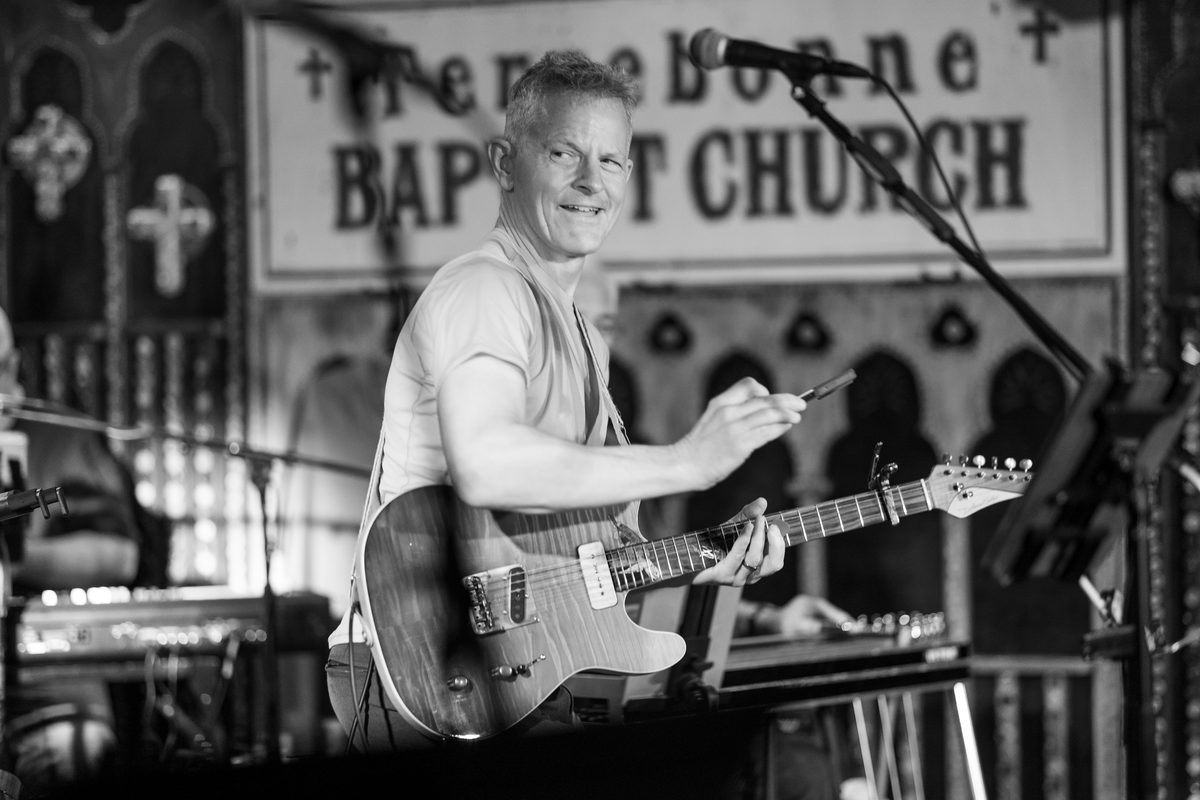
He won OffBeat Magazine’s Best Club Owner award in 2012, and built Chickie Wah Wah from a neighborhood room into what musician Dave Jordan called “the only listening room in town” — no small feat in a city where music is more often social backdrop than the point of the evening.
A Music Church
Where The Artists Still Play
Singer Meschiya Lake, who has performed here for years and recorded a live album in the room, puts it simply: “Dale built the place to be kind of like a music church — a place where artists can come do what they want, to do their best, and be treated with some respect.”
That philosophy shows in who plays here. Jon Cleary — widely considered one of the finest pianists New Orleans has produced — made Chickie Wah Wah a regular home years ago, and still keeps a standing residency at the piano today. Papa Mali and Paul Sanchez keep finding their way back to this stage year after year — both were on the calendar again this year. Alex McMurray, Bonerama, and the Dirty Dozen Brass Band have all played here too — real touring acts who could fill bigger, louder rooms and choose this one instead. The night before his 2019 Jazz Fest performance, Tom Jones made a surprise appearance at Chickie Wah Wah to sing alongside Jon Cleary. That’s the kind of thing that still happens at a music church.
“Chickie Wah Wah is simply one of the best music venues in New Orleans, which is saying a hell of a lot. Chickie’s talent roster is unique: one of the most inspired, interesting, and plain fun, in the city. A perfect, intimate space.”
— Quint Davis, Producer/Director, New Orleans Jazz & Heritage Festival
2021–2022
The Community Saves It
Dale Triguero died on July 8, 2021, at 68, from complications following heart surgery at University Medical Center. He was, at that point, nearly finished paying off the building. His death left Chickie Wah Wah’s future in limbo — the venue his vision had built now belonging to an estate.
A group of music-industry veterans and local investors refused to let it disappear. On July 21, 2022 — a full year after Dale’s passing — they purchased Chickie Wah Wah from his estate for $910,000: the building, its contents, and its legacy. Among the principals were Bryan Bailey, who also owns the historic Civic Theatre, along with Patrick Templeman and Steve Rehage. They committed additional funds to restoration and brought in respected New Orleans music professionals to oversee booking and production, then reopened the doors on December 7, 2022.
“I never had a particular desire to own a music club,” said co-owner Patrick Templeman, “but I really liked what Dale had going on there. When I heard the tragic news that he had passed away, I said to myself that if nobody else will help this club continue on then I’ll raise my hand and help. But I wasn’t the only person that felt that way.” They weren’t. The music church stayed open.
Today
Come Listen
Chickie Wah Wah books 300+ shows a year, and it shows in who’s been on the stage. This year alone the room has hosted James McMurtry, Shannon McNally, Patty Griffin, Jim Lauderdale, and the Jazz Vipers, with Chris Smither and Joshua Ray Walker already booked for the fall. Jon Cleary still anchors his residency most months. Papa Mali and Paul Sanchez keep finding their way back. The room holds around 200 people; every show feels intimate. The Canal Street streetcar still stops out front. The cover charge still goes directly to the musicians. And the walls still hold Dale’s collection of signs from the businesses New Orleans has lost.
Key Facts
- Opened in 2006 by Dale Triguero at 2828 Canal Street, Mid-City New Orleans.
- Named after Bobby Marchan’s 1956 single “Chickie Wah Wah.”
- Dale Triguero died July 8, 2021, at 68.
- A group of investors purchased the venue from his estate on July 21, 2022, for $910,000.
- Reopened December 7, 2022, and has been community-owned since.
- Holds around 200 people and books 300+ shows a year.